 Teemu Talja
Human-written letters. 3X faster.
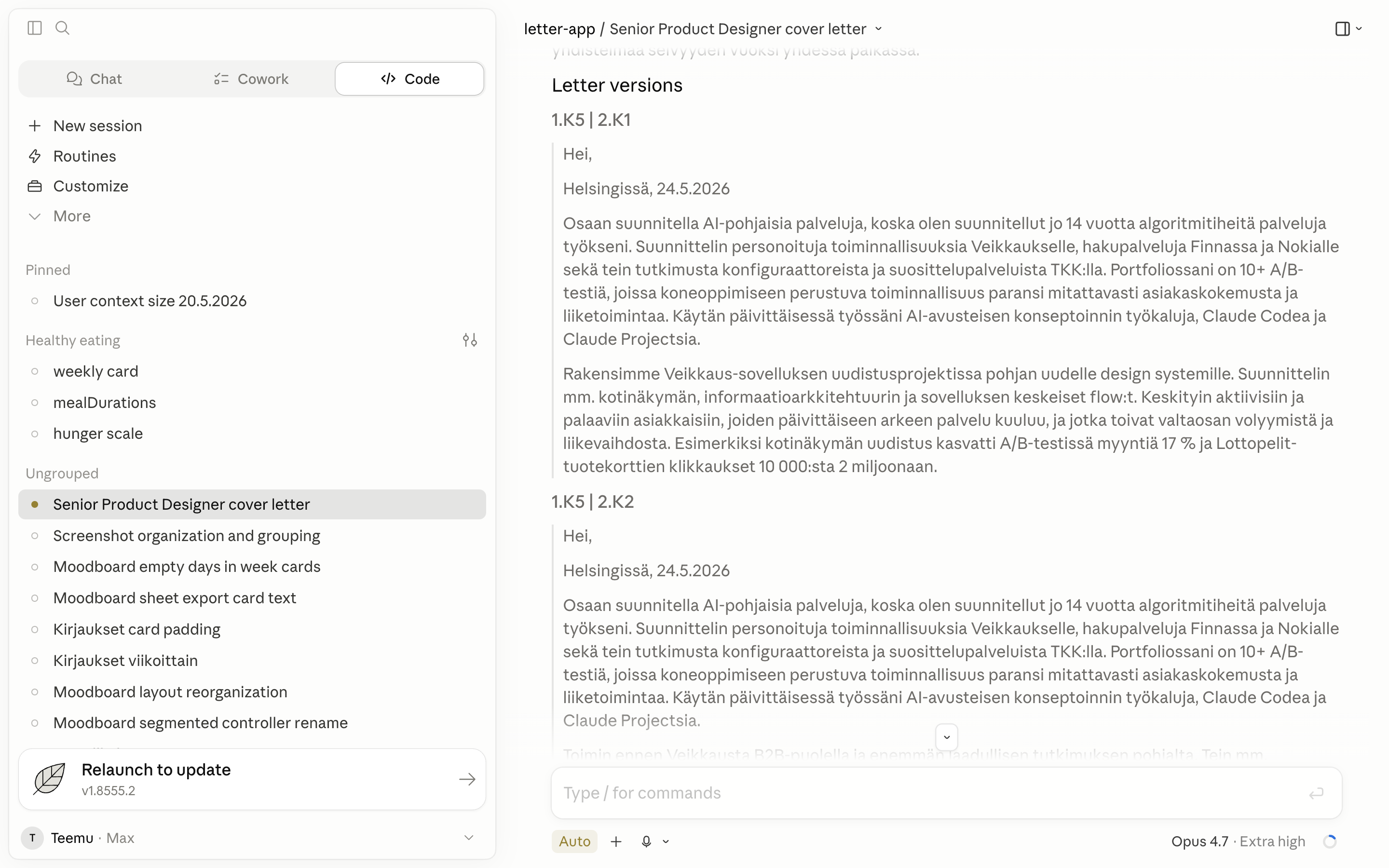
I built an agentic workflow that helps me edit letters. With the editorial assistant, I write three times faster.
The problem
Currently, managers get dozens of AI-generated letters. Most of them sound the same.
Standing out means sounding like yourself. However, writing a tailored letter from scratch well manually takes hours, even days. Could an agent help with choosing the right focus areas, and finding the right expressions?
My earlier solution to this was AI sparring. The AI chats worked great for evaluation, but the workflow was still slow.
The letter editor
I had interviewed two managers when creating the letter concept. Thus I knew the letters were a good market fit, but the workflow was less successful.
I wanted an agent that edits instead of writing from scratch because the interviewees wanted to hear your own voice. I had also found myself copy-pasting old letters because the quality had reached a plateau. So, even though I generally dislike AI-written content, I decided to give it a go.
An editing based workflow maintains your own voice because you’ve actually written all the text. Machine learning is great at matching patterns between texts, though.
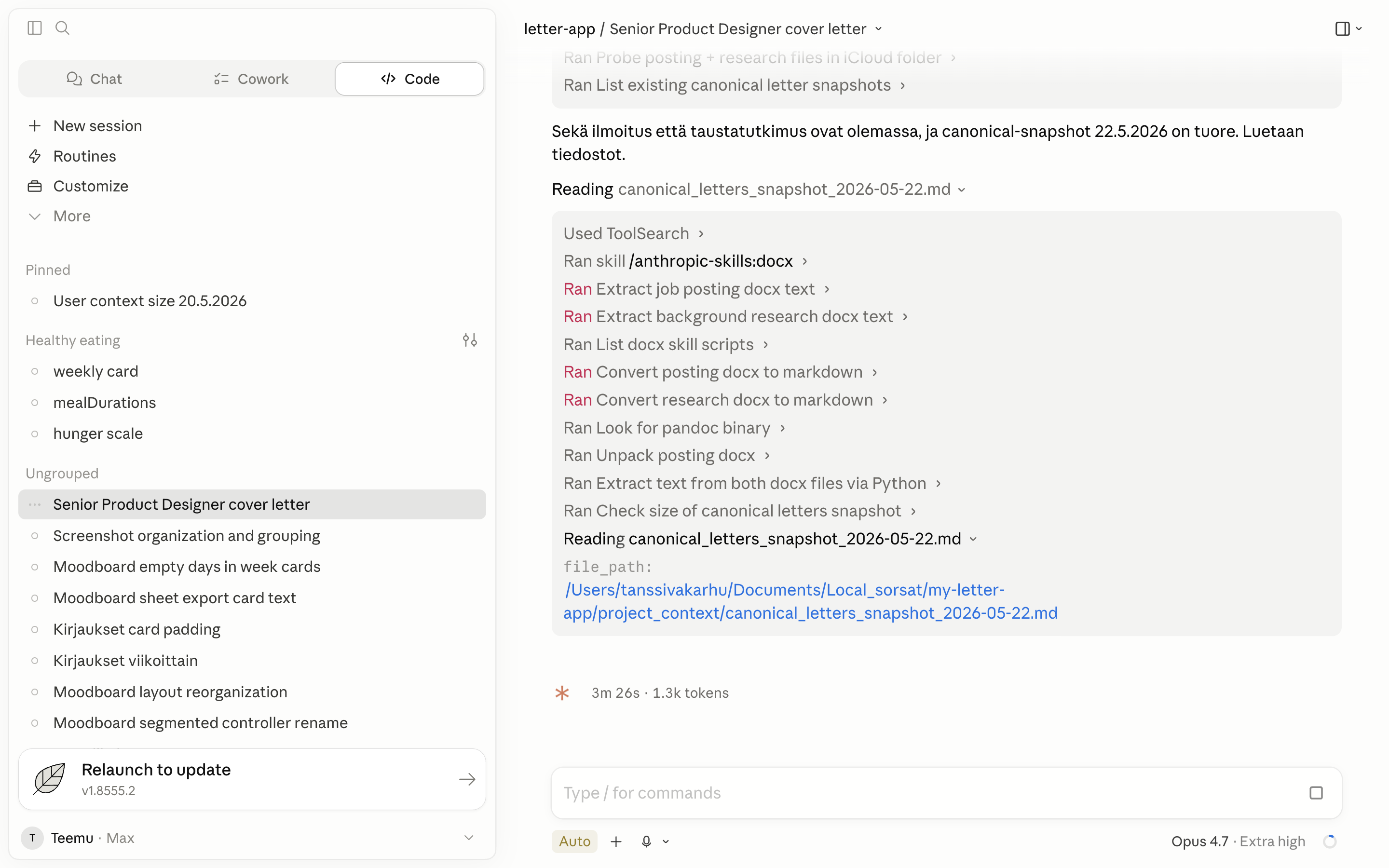
The paragraphs and the full sentences of manually written letters are reused. Claude is allowed to substitute company names, roles, and team names, but must otherwise stick to the original phrasings. When the user finishes a letter, it’s added to the set of source letters.
The agentic workflow
The agent reads the job posting, the company background research, and the “canonical” source letters. Then it proposes four full paragraph candidates per round (image below).
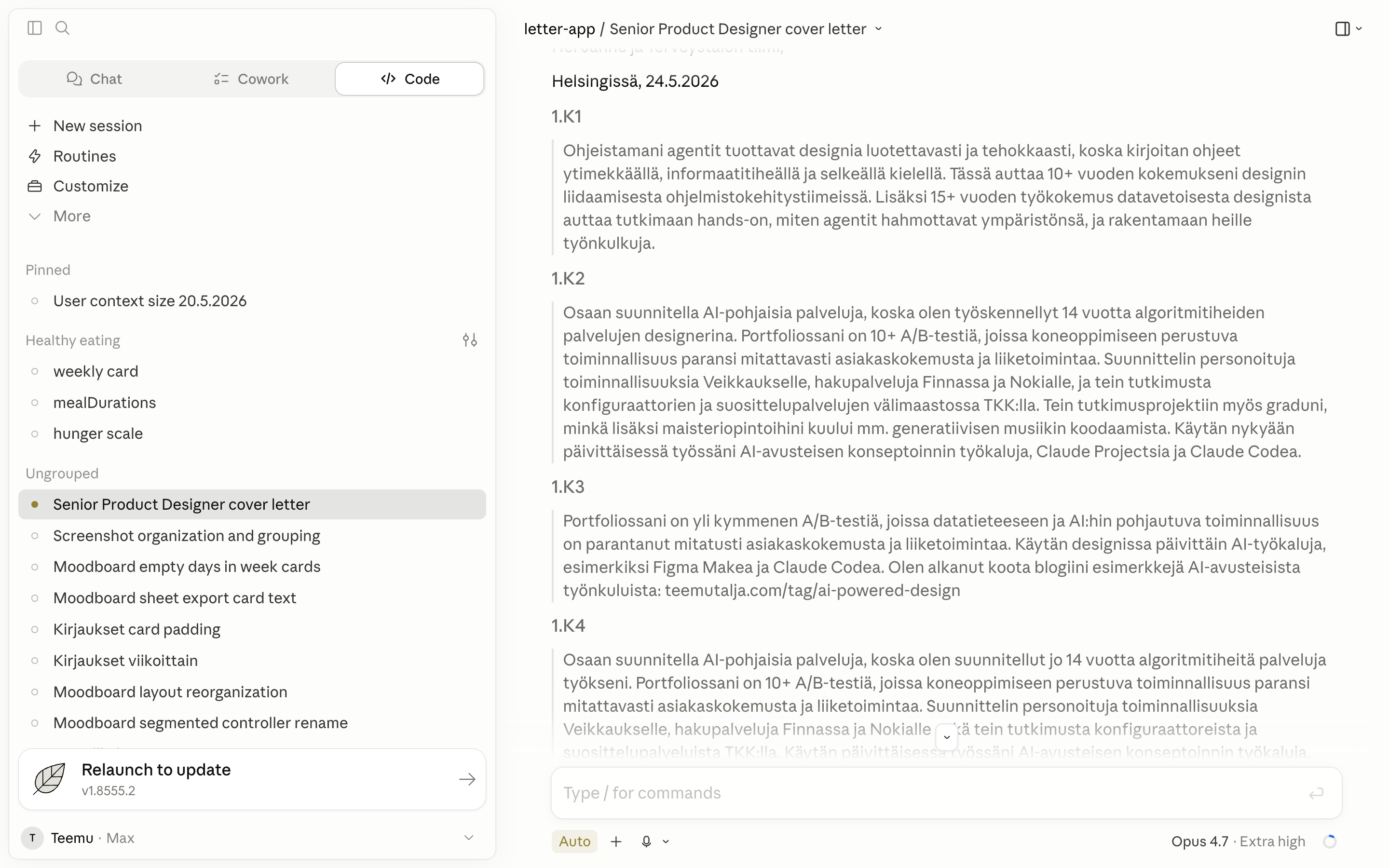
Familiar to many, AI models have their manners of expression. Advanced prompt engineering is necessary to make the models’ follow your style. I put some effort to get this going, but now the user can just use gut feelings and read through the fluent output.
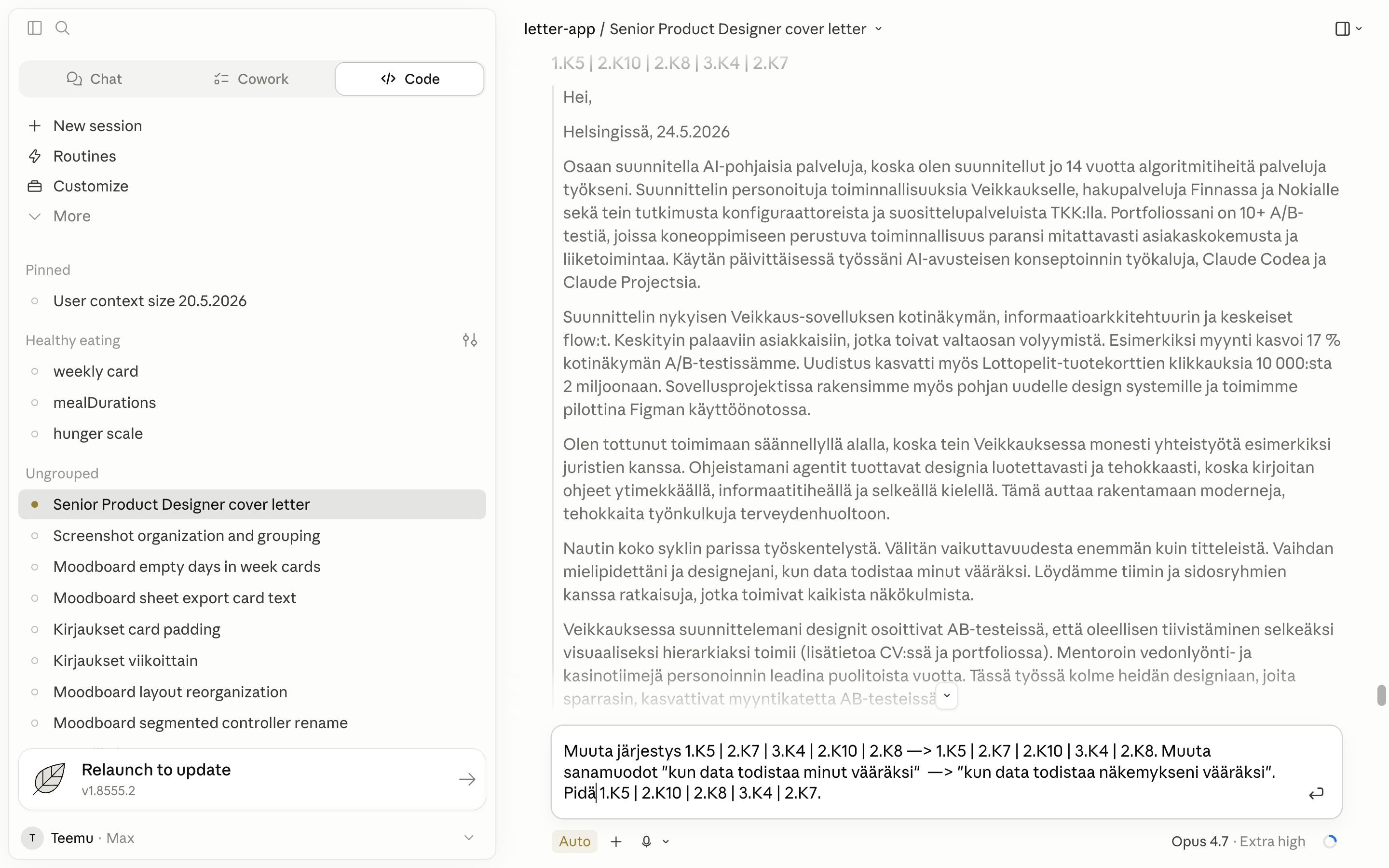
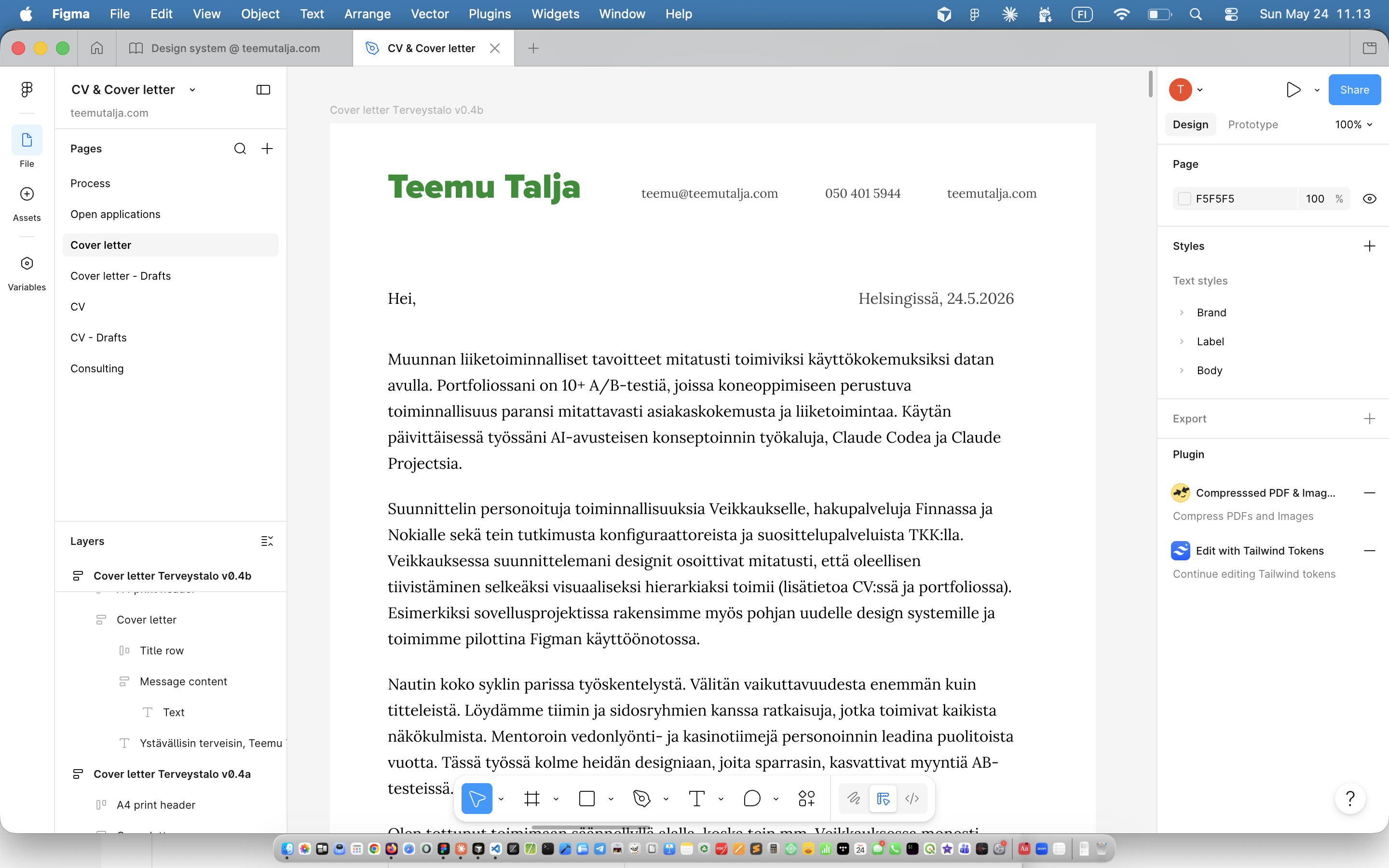
After five or six rounds, the agent evaluates letter-role fit and flags anything missing or overrepresented. The final letter is run to Figma through a design system with dedicated components and tokenization. Having printed the letter to Figma, Claude evaluates the visual output and runs an improve-evaluate loop until the design’s flawless.
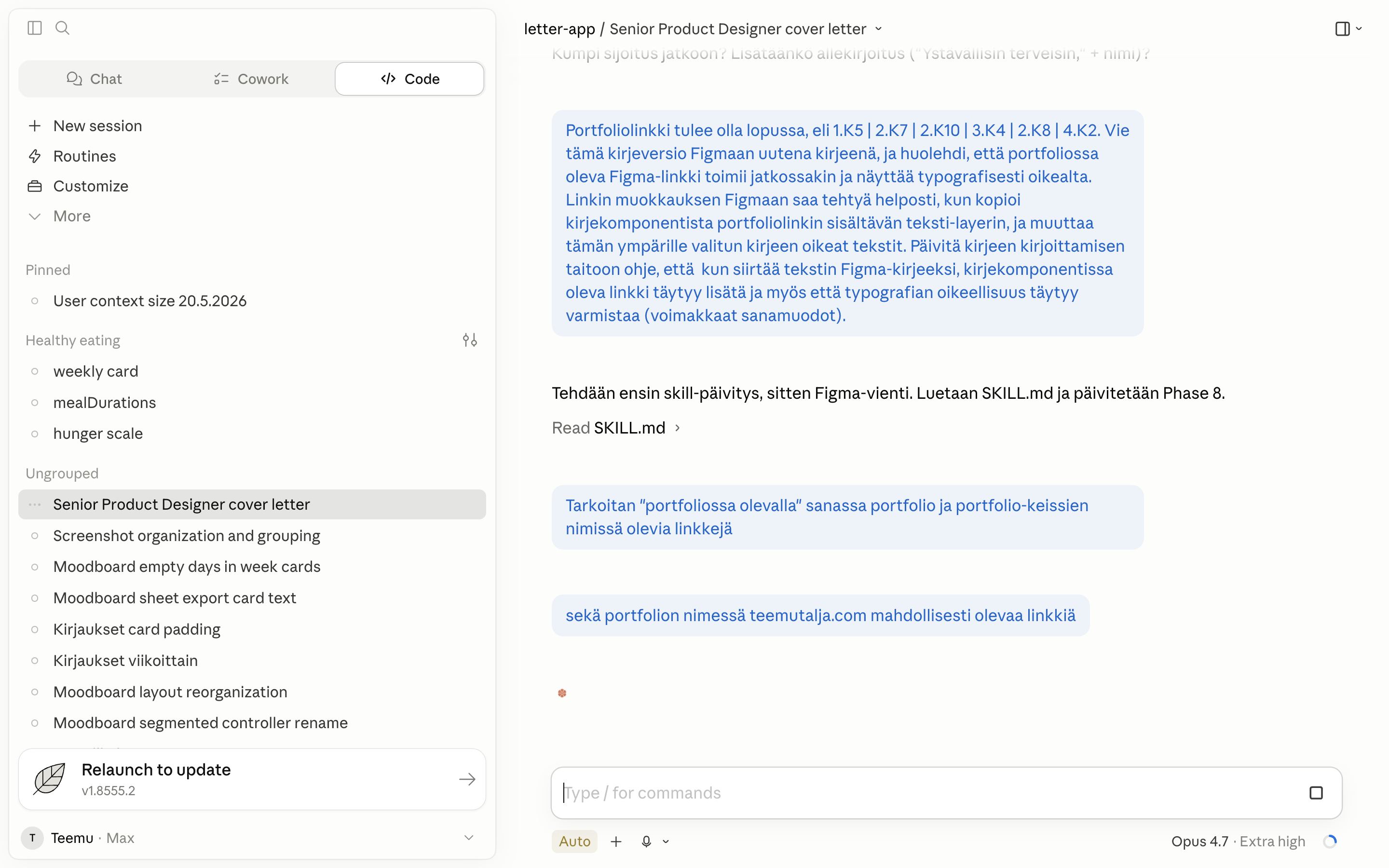
An agentic workflow is intelligent and flexible, so you can also rewrite parts of the texts when you want.
Self-repairing rules
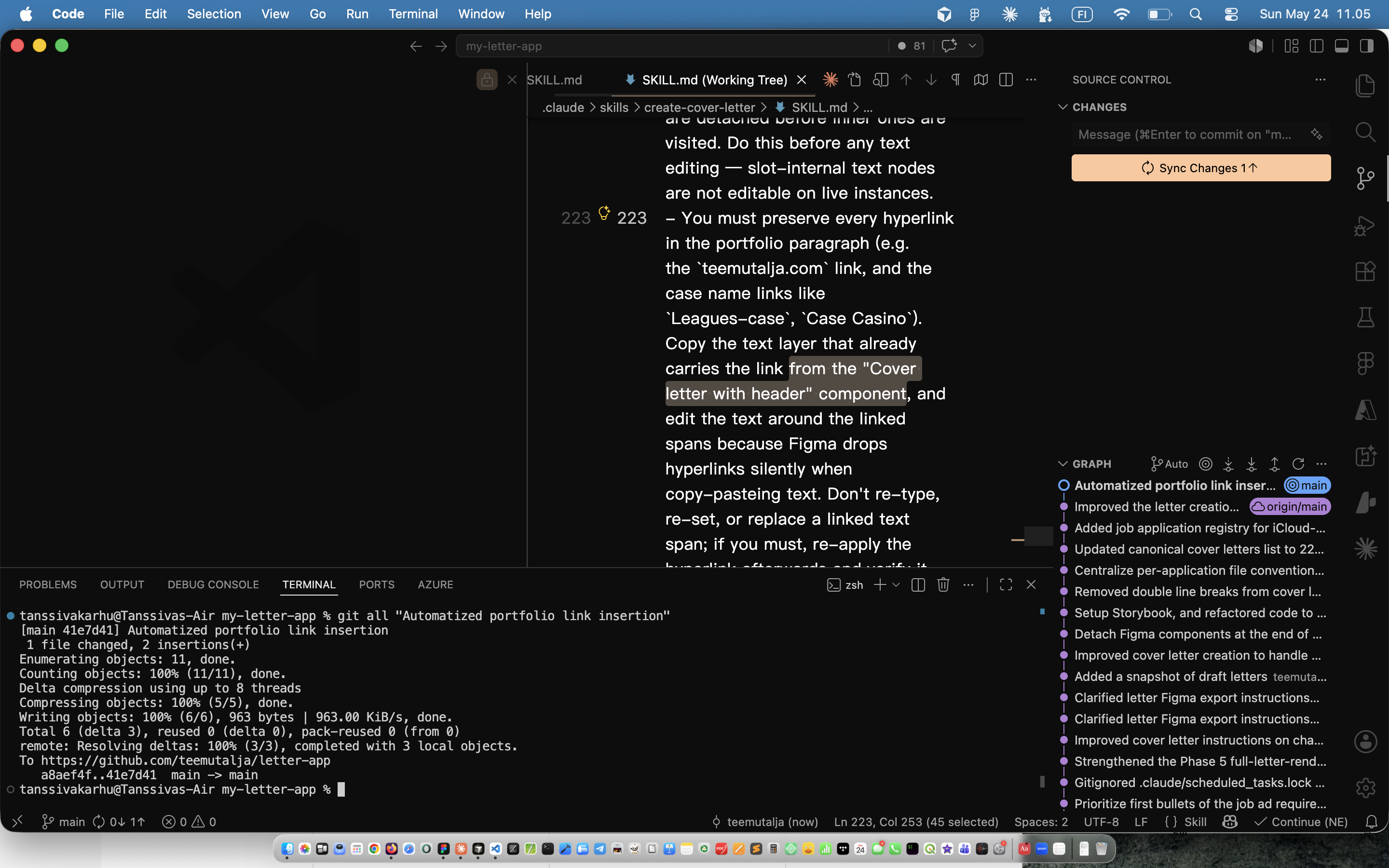
I still improve the workflow while writing letters. So, the workflow has the meta levels of self-reflection and of instructing Claude to self-repair the instructions.
Results
Writing three letters in the time of one saves time for research. This helps you to better understand the target companies.
I also use saved time for content improvements. For example, the letter in this article is for an agentic design role, where I didn’t have pre-written paragraphs. Even then, I could finish the letter in the time it would have taken me to write one letter earlier.
The new way of writing also creates less cognitive load. It produces fewer expectations and more insights. It lets you run another job in parallel when waiting for Claude to create and print its output.